
.avif)
.webp)

.webp)
Fibroscan helps assess liver health by measuring stiffness and fat levels in the liver. It is commonly used to detect conditions such as:
Fibroscan results provide key insights into liver health, allowing treatment to be tailored and helping to stop liver disease from progressing.
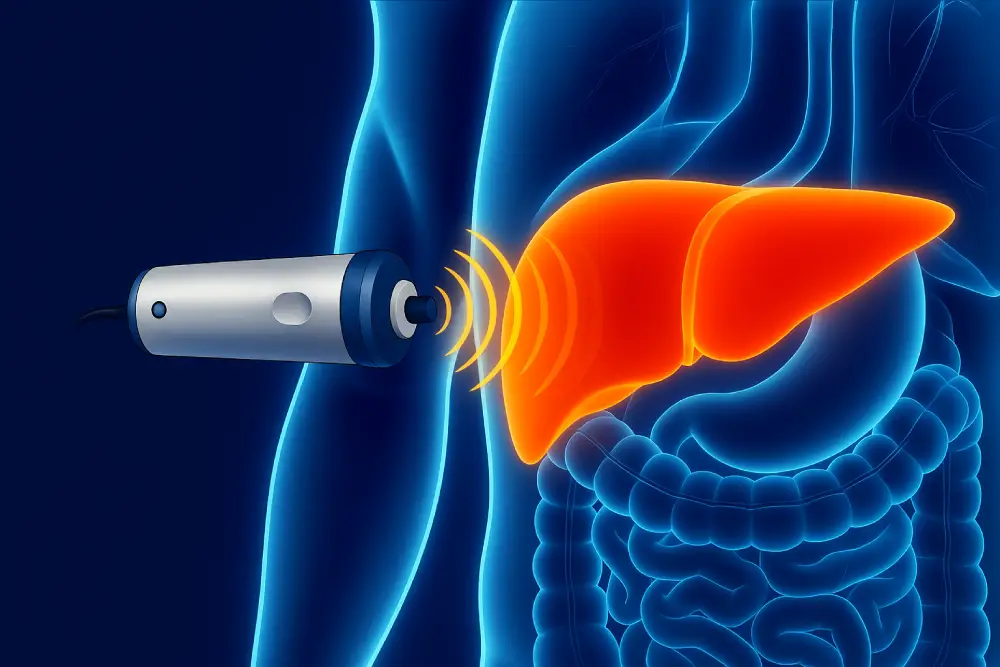
Fibroscan uses advanced ultrasound technology to assess liver stiffness and fat levels. A small probe is placed on the skin over the liver, sending a painless energy pulse that generates a wave through the tissue. The wave’s speed reveals liver stiffness (linked to fibrosis) and fat content, with faster speeds often indicating fibrosis or cirrhosis. The test is quick, taking just 10–15 minutes, and delivers results immediately, making it a fast and reliable way to evaluate liver health.
Preparing for a Fibroscan is simple. You’ll usually be asked to avoid eating or drinking for two to three hours beforehand, as fasting helps improve the accuracy of the results. Wear loose, comfortable clothing that allows access to your upper abdomen, where the probe will be placed. You’ll be given clear instructions in advance so you know exactly what to expect.
A Fibroscan is a fast, painless test that takes about 10–15 minutes. You’ll lie on your back with your right arm above your head while a water-based gel is applied to your skin. A probe is then placed over your liver, sending gentle pulses that may feel like light tapping but cause no discomfort. Once the readings are finished, the gel is wiped away, and you can return to your usual activities straight after.