
24hr Oesophaegeal
pH-Impedance

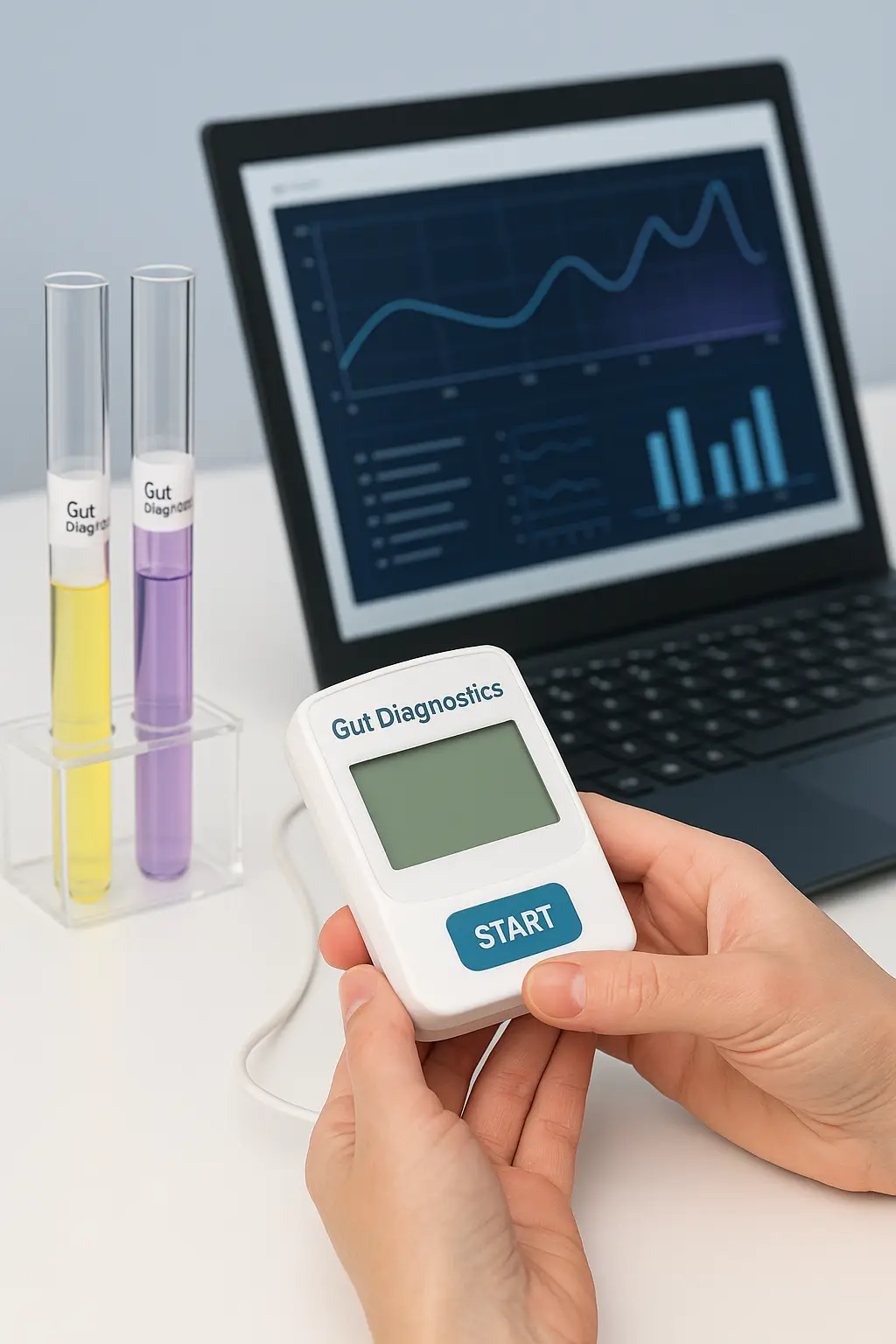
Twenty-four-hour pH impedance testing measures acid reflux in the esophagus over a full day using a thin, flexible tube inserted through the nose into the stomach
Header image

What is a 24hr Oesophaegeal
pH-Impedance

24-hour pH impedance testing lets your doctor evaluate both acid and nonacid reflux from your stomach into your esophagus over a full day. A thin, flexible catheter is inserted through your nose into the stomach, where it detects changes in acidity along its length and transmits the data to a small belt-worn computer. The catheter stays in place for 24 hours while you eat, drink, sleep, and carry on with your usual activities, allowing your doctor to monitor your esophagus continuously.

What conditions can be diagnosed?

Twenty-four-hour pH impedance testing is used to detect gastroesophageal reflux disease (GERD), a condition where stomach acid flows back into the esophagus. GERD may cause symptoms such as:

  • Burning sensation in the chest (heartburn)
  • Trouble swallowing (dysphagia)
  • Hoarse voice or changes in your voice
  • Ongoing cough or frequent throat clearing
  • Feeling of a lump in the throat (globus sensation)

This test is one of several methods your doctor can use to evaluate GERD and other conditions affecting the esophagus or stomach. GERD can often be managed with diet and lifestyle changes, but medications or surgery may sometimes be needed.

Early testing allows for accurate diagnosis and targeted treatment, helping to avoid unnecessary therapies and side effects. Twenty-four-hour pH impedance testing is a valuable tool in achieving this.

Lifestyle-Friendly

Allows patients to eat, drink, sleep, and carry out daily activities while wearing the monitoring device.

Accurate GERD Diagnosis

Helps confirm gastroesophageal reflux disease (GERD) and distinguishes it from other conditions with similar symptoms.

Comprehensive Reports

Prepared by experienced gut health clinicians, giving you clear next steps for relief and long-term wellbeing.

Fully Regulated

Performed in a highly-regulated hospital environment.

How do I prepare for 24-hour pH impedance testing?

Before your test, your doctor will review any medications you take and advise if any should be paused. You’ll need to avoid eating or drinking for about four hours before the procedure. Once the catheter is in place, you can eat and drink normally, and no sedation or anesthesia is required, so you can carry on with your usual activities immediately after.

Risks of 24-Hour pH Impedance Testing

For most people, 24-hour pH impedance testing is safe and well-tolerated. Some individuals may find the catheter uncomfortable, especially if they have a sensitive gag reflex, and mild throat irritation can occur. In very rare cases, the procedure can cause more serious complications, such as injury to the esophagus.

Alternatives to 24-Hour pH Impedance Testing

Other ways to evaluate the esophagus include an endoscopic procedure called an esophagogastroduodenoscopy (EGD). This more comprehensive test allows doctors to examine the esophagus, stomach, and duodenum (the first part of the small intestine). Unlike pH impedance testing, an EGD requires sedation.

24-Hour pH Impedance Testing: What to Expect

This procedure does not require anesthesia or sedation, so you will remain awake and alert throughout. A numbing spray is applied to your nose and throat to make the insertion of the catheter comfortable. First, the doctor measures the distance from your nose to your stomach using a manometry catheter. The testing catheter is then gently guided through your nose to the stomach as you swallow small sips of water.

Once in place, the catheter is secured with tape over your face and ear, and connected to a small computer, about the size of a smartphone, which records acid levels in your esophagus.

You can leave the office and continue your normal activities, including eating, drinking, talking, and breathing without interference. Your doctor may ask you to keep a diary of meals, activities, and any symptoms you notice.

Over the 24-hour period, the catheter continuously transmits data to the computer, correlating reflux events with your symptoms. The next day, you return to the office for catheter removal and data download. Your doctor will review the results to assess acid levels and, if necessary, discuss diagnosis and treatment options for GERD or other conditions.

Our Testing Process

Getting 24-hour pH-impedance testing is simple and straightforward. After your referral and booking, a small, flexible catheter is gently inserted through your nose to the stomach, and you’ll wear a compact monitor on a belt while going about your normal day. Within 1–2 days, the catheter is removed, the data is reviewed, and you’ll have a follow-up consultation to discuss the findings, diagnosis, and personalised treatment options.

Book your appointment

If you’ve been referred by your GP or another healthcare professional, you can book directly with us. If you don’t yet have a referral, our team can advise you on how to arrange one.

Attend your 24-hour pH-impedance test

On the day of your test, a thin, flexible catheter will be gently inserted through your nose and guided to the opening of your stomach. The catheter’s tip records acid and nonacid reflux throughout your esophagus and transmits the data to a small monitor you wear on a belt. The test is painless, requires no sedation, and you can eat, drink, and go about your usual activities while the catheter collects 24 hours of information for your doctor to review.

Receive your results and personalised report

Within 1–2 weeks, your doctor will review the data collected by the catheter and provide a detailed report on your acid reflux patterns. You’ll then have a follow-up consultation to go over the results, discuss treatment options, and plan any further investigations or referrals if needed.

See what our patients have to say.

"On time, clear & precise , I felt relaxed and comfortable , and he was easy to speak to."
Verified on Doctify
16 January 2025
"A high level of skill coupled with a calm professionalism made my first colonoscopy a relatively straightforward experience."
Verified on Doctify
06 November 2025
"Excellent service from initial consultation through to my procedure."
Verified on Doctify
12 November 2025
"A very useful experience everything explained well, no problems, pleasant Doctor."
Verified on Doctify
02 February 2026
"My visit was well organised with a brief consultation and blood test."
Verified on Doctify
11 August 2025
"I am very pleased with every aspect of the treatment and care I received."
Verified on Doctify
25 July 2025
"I was worried coming in but everyone was very welcoming and made me relax and the procedure was much quicker than expected."
Verified on Doctify
25 June 2025
"Wonderful experience from start to finish. Everything was explained very clearly and reassuring."
Verified on Doctify
13 June 2025
Throughout all this he has been very professional, friendly and extremely supportive. It all was a very positive experience. Thank you.
Verified on Top Doctors
11 December 2025
One of the few doctors I have seen whom I truly feel listened to, empathised with and whom I can trust to look after my health and get to the bottom of what's wrong. Thank you so much!
Verified on Top Doctors
6 December 2025
"The water based technique for colonoscopy enabled me to be cured without trauma of surgery. I am eternally grateful."
Verified on Top Doctors
24 November 2025
"All the staff were amazing, friendly and professional."
Verified on Top Doctors
21 November 2025
"Professional, calm, and reassuring, explained everything clearly, and I didn’t feel a thing. Outstanding care throughout, I can highly recommend him."
Verified on Top Doctors
31 October 2025
"Outstanding care throughout, I can highly recommend him."
Verified on Top Doctors
31 October 2025
"I would definitely recommend and thank them for the care and attention"
Verified on Top Doctors
12 October 2025
"Very personable and professional from the start and made me feel at ease immediately. He’s quickly got me through the process and I couldnt be more impressed."
Verified on Top Doctors
9 October 2025

How much does a 24-hour pH impedance test Cost?

Simple, transparent pricing with no hidden fees.
Paying for yourself
You don’t need private medical insurance to be treated at Gut Diagnostics. As a self-pay patient, you can access safe, high-quality healthcare at times that work best for you.

You don't need a referral from your GP or specialist. We provide comprehensive consultations to ensure the test is right for you. The self-pay route makes the process much simpler — there’s no need for insurance authorisation, and you’ll benefit from a wider choice of consultants and more flexible appointment times.
Paid by insurance
Gut Diagnostics is recognised by all major health insurance providers. If you have a personal policy, or cover arranged through your employer, you can use it to pay for your care — from your first consultation through to treatment, surgery, and aftercare such as physiotherapy.

As policies vary, it’s important to check with your insurance provider to confirm exactly what is included in your cover before starting treatment.

24-hour pH impedance Testing

Private 24-hour pH impedance Testing at Gut Diagnostics costs £2,355
£2,355
INCLUDES
Your fee includes the procedure as well as:
Initial consultation
Personalised referral letter
Monitoring and support
High-resolution images
Comprehensive report
Priority scheduling
Treatment advice
Coordination with specialist
Follow-up consultation
Safe hospital environment
Enquire Now

Frequently asked questions

Everything you need to know about the product and billing.
What is 24-hour pH impedance testing?
It is a procedure that measures acid and non-acid reflux in the esophagus over 24 hours using a thin catheter that transmits data to a small recording device.
Why is the test done?
The test helps diagnose gastroesophageal reflux disease (GERD) and evaluates symptoms like heartburn, difficulty swallowing, persistent cough, or hoarseness.
How do I prepare for the test?
You may need to stop certain medications and should avoid eating or drinking for about four hours before the test. Your doctor will give specific instructions.
What does the test involve?
A thin, flexible tube is inserted through your nose into the stomach. The catheter records acid levels while you go about your normal daily activities for 24 hours.
Will the test be uncomfortable?
Most people tolerate the procedure well. Some may feel mild throat irritation or gagging when the catheter is inserted, but it is generally painless.
Can I eat and drink during the test?
Yes, after the catheter is in place, you can eat and drink normally. You may be asked to keep a diary of meals, activities, and symptoms.
Are there any risks?
The test is safe for most people. Rarely, there may be mild throat irritation, gagging, or in extremely rare cases, minor injury to the esophagus.
How are results reported?
The data is analyzed by your doctor, who will provide a detailed report and discuss the findings, treatment options, or any further tests that may be needed.

More Information

Can’t find the answer you’re looking for? Please chat to our friendly team.

Our Flagship Clinic

At Gut Diagnostics, we are a dedicated team of gut health specialists, bringing together advanced diagnostics and compassionate care.

Our flagship clinic is proudly based at The Priory Hospital, a renowned centre of medical excellence. This prestigious setting provides our patients with access to state-of-the-art facilities, a safe and regulated environment, and the support of a leading multidisciplinary healthcare team.

Our specialists are here to guide you on your journey to better digestive health.